Attic Ventilation in Hill Country Homes: Why It Matters More with Dark Shingles and High Heat
Hey, Mario Fender here with Klaus Roofing Systems of Texas Hill Country in New Braunfels.
After walking hundreds of attics around New Braunfels, Canyon Lake, Seguin, Bulverde, and the rest of the Hill Country, I can tell you one thing for sure: most homeowners don’t think about attic ventilation until their energy bills shoot up or their shingles start curling way too early.
In our Texas heat, good attic ventilation isn’t just a nice-to-have — it’s one of the smartest things you can do for your roof’s lifespan, your home’s comfort, and your monthly electric bill.
How Our Hill Country Heat Affects Your Attic
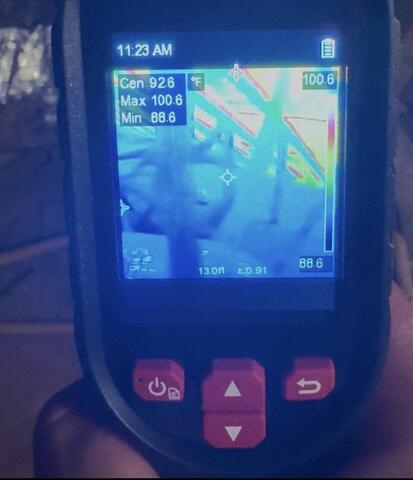
Step into most attics around here in July or August and it hits you like a furnace — temperatures easily hit 140°F or higher. Our brutal summers plus the extra humidity from the Guadalupe River and Canyon Lake create a perfect storm for heat and moisture buildup.
That trapped heat doesn’t just make your upstairs bedrooms hotter. It bakes the roof decking from underneath, breaks down asphalt shingles faster, and makes your air conditioner work overtime. Poor ventilation can easily add hundreds of dollars to your summer electric bill while quietly shortening your roof’s life by several years.
Why Dark Shingles Make the Problem Worse
A lot of homes around here look sharp with those deep charcoal, brown, or black architectural shingles — they hide dirt well and give that classic Texas look. But dark colors absorb a lot more solar heat than lighter ones.
On a sunny 95°F day, the surface of a dark shingle can hit 160–170°F. Without good airflow underneath, that heat radiates straight into your attic. The result? Shingles age faster, granules shed earlier, and you start seeing curling or cracking — sometimes on roofs that are only 8–12 years old.
I see this pattern all the time during inspections. A well-ventilated roof with dark shingles still holds up great. The same roof with blocked soffits or no ridge vent? It’s usually showing clear signs of heat stress.
Signs Your Attic Ventilation Needs Attention
Here are the common things we point out to homeowners:
- Hot or stuffy upstairs rooms in summer
- Electric bills that jump hard after the first heat wave
- Granules piling up in the gutters (beyond normal wear)
- Curling or cupping shingles you can see from the ground
- Musty smells or moisture stains in the attic
- Ice dams or frost on the roof during our rare cold snaps (yes, even here)
If you’re noticing any of these, it’s worth taking a closer look.
The Basic Rule of Thumb for Ventilation
A solid starting point we use on inspections around New Braunfels and the Hill Country is about 1 square foot of net free ventilation area for every 150 square feet of attic floor space. We split it evenly between intake (low soffit vents) and exhaust (high ridge or box vents).
Some situations allow a 1/300 ratio (half as much), but in our hot climate with dark shingles I usually recommend going with the stronger 1/150 setup when we can. The real key is balance — you need plenty of intake and exhaust working together. Blocked soffits or insulation pushed up against the vents is one of the most common problems I run into, and it kills the whole system no matter what ratio you use.
We always measure and calculate it properly for your specific roof and attic during a free Roof Health Check.
Common Ventilation Systems That Work Well Here
There’s no one-size-fits-all, but here’s what we recommend most often for Hill Country homes:
- Ridge vent + soffit vents – The gold standard for most gable and hip roofs. Excellent airflow and a clean look.
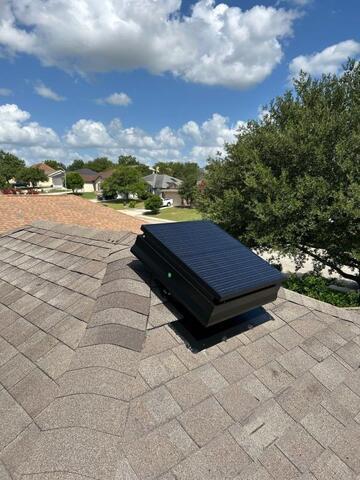
- Solar powered attic fans – Great for pulling hot air out fast with no electric bill.
- Box vents / turtle vents – Good backup when ridge length is limited.
- Gable-end vents – Easy to add but usually not enough on their own.
- Powered attic fans – Move a lot of air, but we use them sparingly because they pull electricity.
Solar-Powered Attic Fans – A Good Option for Some Homes
Sometimes passive ventilation isn’t quite enough, especially on older homes or ones with dark shingles that really soak up the heat. In those cases I’ll recommend adding a solar-powered attic fan.
These fans run completely off sunlight — no wiring, no extra bill. They kick on when the sun is strong (exactly when your attic is baking) and can drop attic temps 20–40°F on sunny days. That takes real load off your AC and helps your shingles last longer.
They work best as a supplement to good passive ventilation, not a replacement. Perfect for lake homes or tricky roof designs where a full ridge vent is tough.
What Proper Ventilation Looks Like on a Re-Roof
When we replace a roof, we always check and upgrade ventilation as needed. That often means:
- Installing or repairing a continuous ridge vent along the peak
- Adding or clearing soffit vents (many older homes have them painted over or blocked by insulation)
- Making sure baffles keep insulation from blocking airflow
- Sealing unnecessary holes while keeping the system balanced
Done right, you can drop attic temperatures by 20–30°F, extend shingle life, and make the whole house more comfortable.
Bottom Line
Your roof is a complete system. Great shingles with poor ventilation will never perform like average shingles with excellent ventilation. In our hot, demanding climate, getting the airflow right is one of the best investments you can make for your home.
If you’re thinking about a roof replacement, repair, or just want peace of mind before the next round of summer heat or hail season, I’ll come out for a free Roof Health Check. We’ll walk the attic together, I’ll show you exactly what’s happening up there with my thermal camera if needed, and give you straight answers — no pressure, just honest recommendations.
Give me a call directly at 1-830-214-0441 or schedule online at krsoftxhillcountry.com.
Mario Fender Klaus Roofing Systems of Texas Hill Country 1965 Post Rd, Suite 208, New Braunfels, TX 78130 Serving New Braunfels, Canyon Lake, Seguin, San Marcos, Boerne, and the Hill Country ¿Habla Español? We offer service in Spanish too.